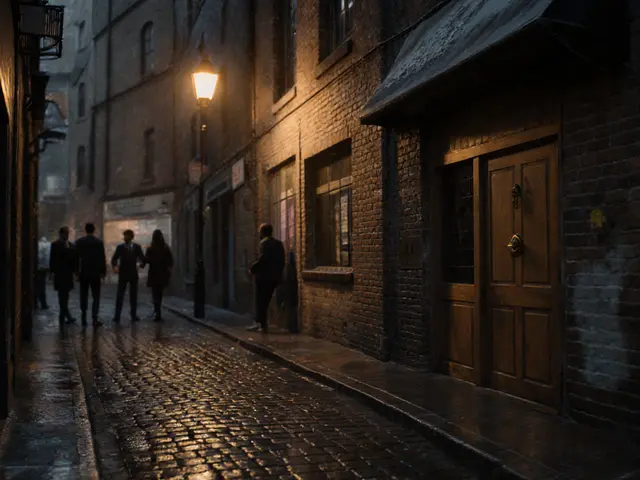
London’s nightlife isn’t just about clubs and cocktails-it’s a living museum of art, sound, and story.
If you think London’s night scene is all about loud bass and crowded dancefloors, you’re missing the real heartbeat of the city. For culture lovers, the after-dark experience here is layered: intimate jazz rooms tucked beneath bookshops, late-night poetry slams in former printing presses, and opera singers warming up in alleyways before a midnight performance. This isn’t partying. This is culture unfolding in real time.
Where the arts stay open past midnight
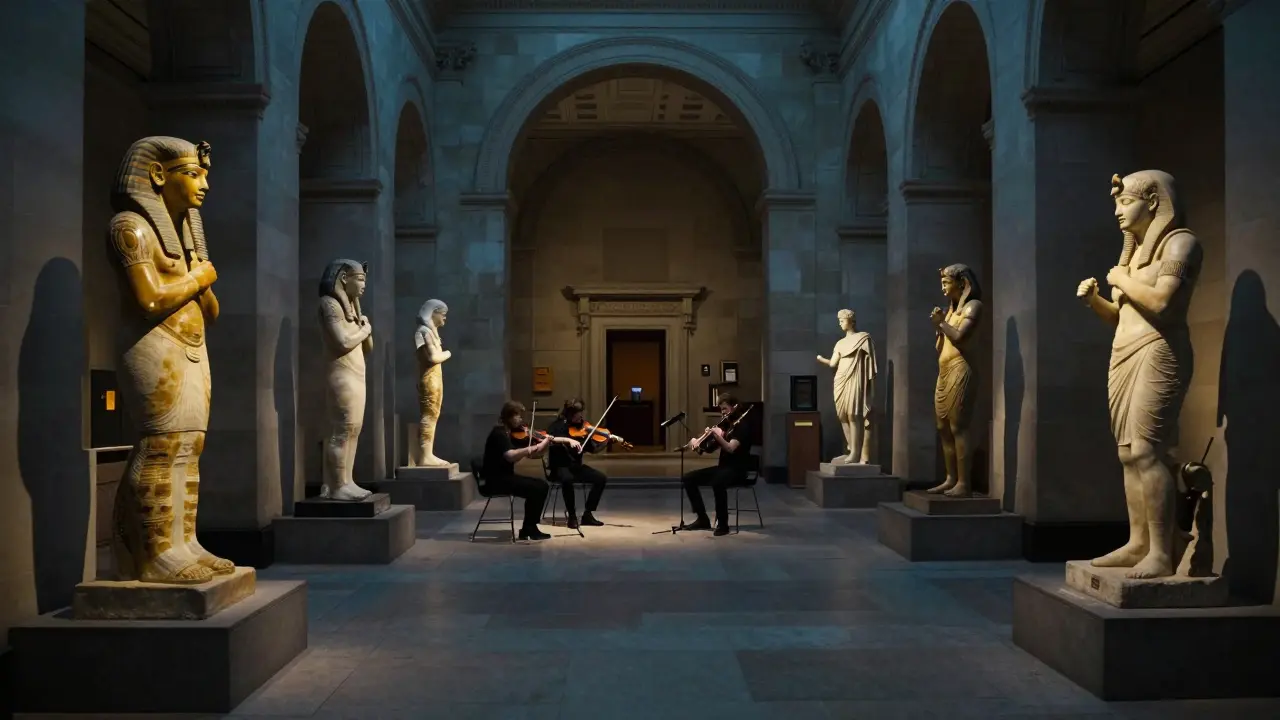
Most museums shut down by 5 PM, but London’s cultural institutions don’t. The British Museum is a world-renowned institution housing over 8 million artifacts, with select late-night openings on Fridays during special exhibitions. On Friday nights, you can wander through Egyptian mummies and Roman statues under soft lighting, with live string quartets playing in the Great Court. No crowds. No rush. Just you and 3,000 years of history.
At the Tate Modern a leading modern art gallery on the South Bank, hosting Friday Late events with live performances, artist talks, and immersive installations that run until 10 PM, the lights dim after 8 PM. You might find yourself standing in front of a Banksy projection while a poet recites lines about urban decay-just feet away from strangers who become conversation partners over cheap wine.
The hidden jazz cellars and speakeasies
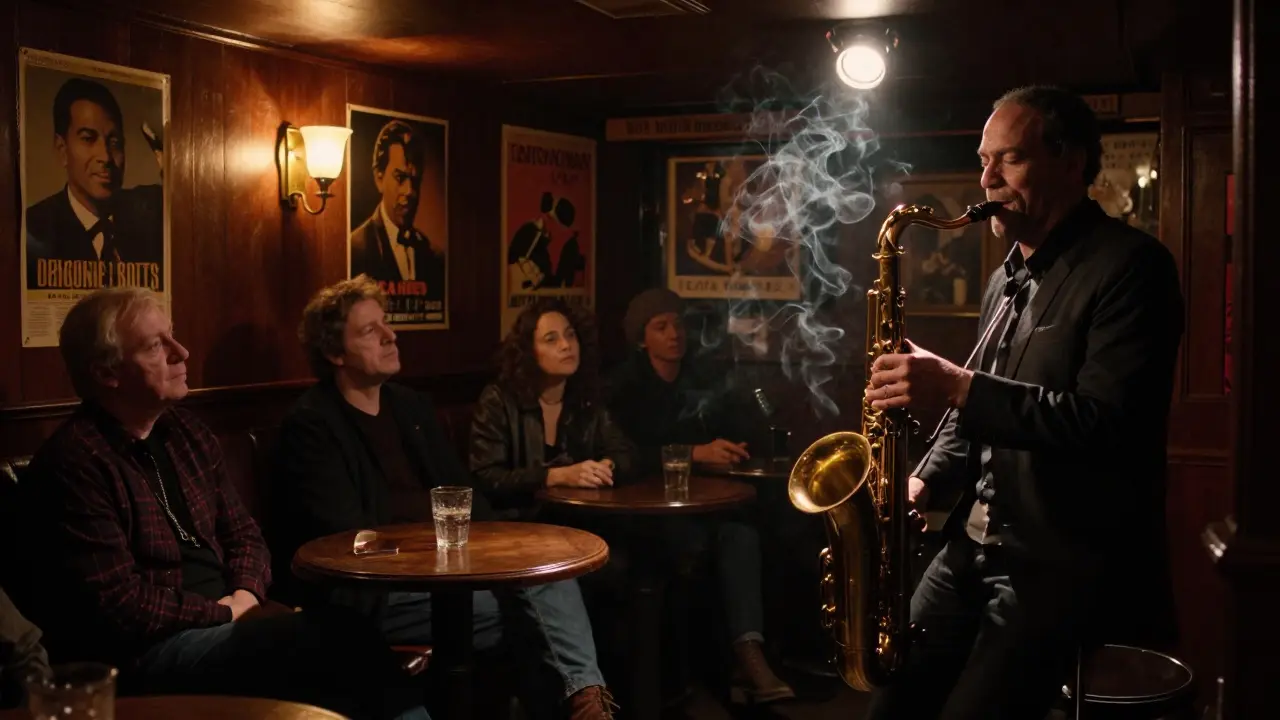
Forget the neon-lit clubs. The real jazz scene in London hides in basements. Ronnie Scott’s a world-famous jazz club in Soho, founded in 1959, where legends like Miles Davis and Ella Fitzgerald once performed still draws top-tier musicians every night. Tickets sell out fast, but if you show up at 10:30 PM, you might catch the second set-when the room gets quieter, the playing gets deeper, and the crowd leans in.
Down in Peckham, The Jazz Cafe a historic venue that blends soul, Afrobeat, and experimental jazz, often hosting late-night jam sessions after the main show ends turns into a listening lounge after 11 PM. No stage. No barriers. Just musicians and audience members trading rhythms like stories.
Live poetry, spoken word, and underground literature
London’s literary soul doesn’t sleep. In Camden, The Poetry Society an organization that supports emerging poets and hosts monthly open mic nights at its basement venue in Covent Garden fills a 19th-century bookshop with voices you won’t hear anywhere else. One night, a 17-year-old from Brixton reads about her father’s deportation. The next, a retired professor recites haikus about the Thames. The silence after each piece isn’t awkward-it’s sacred.
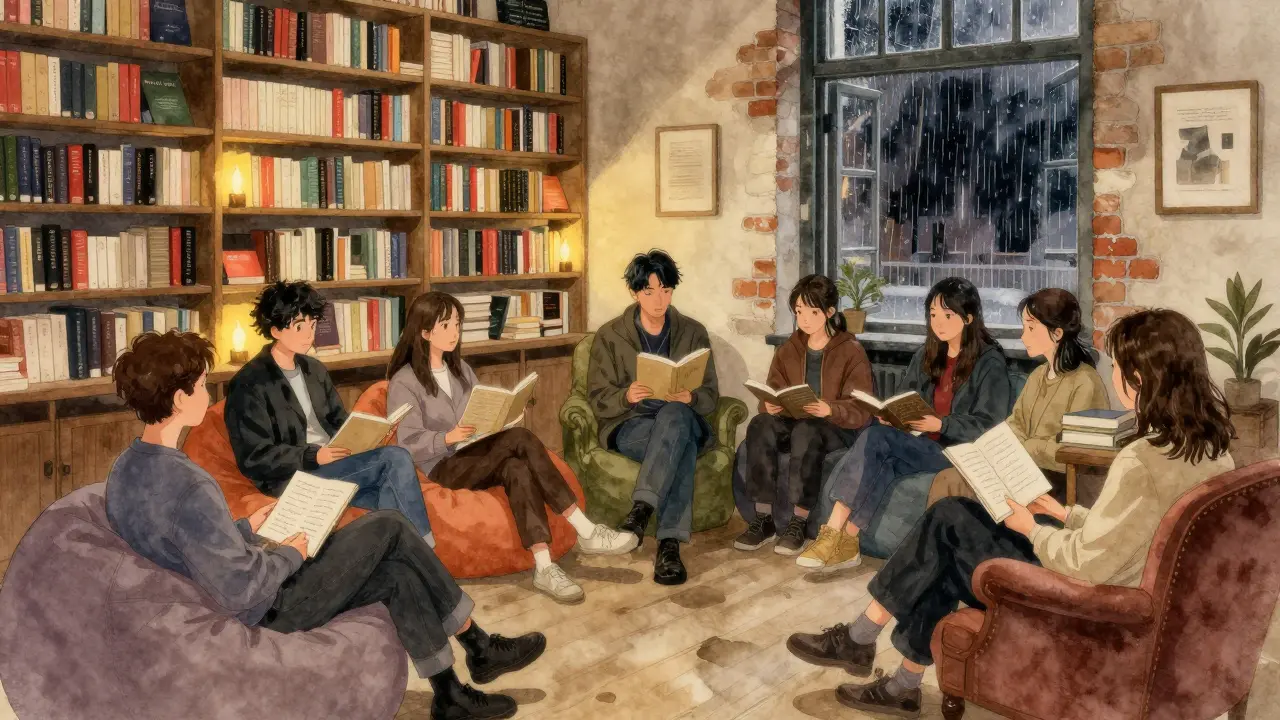
At Booksmith a tiny independent bookstore in Shoreditch that turns into a literary salon after 8 PM, hosting author readings, zine swaps, and midnight book clubs, you can buy a first edition of a local poet’s chapbook for £5 and sit on a beanbag while the author reads from their latest work. No press releases. No PR team. Just words, warmth, and wonder.
Experimental theatre and immersive nights
Traditional theatre ends at 10:30 PM. But in London, the real drama starts later. Shakespeare’s Globe a faithful reconstruction of the original Elizabethan playhouse, offers "Globe to Globe" late-night performances during summer months, with actors performing in languages from Swahili to Mandarin. But the real gem is Immersive LDN a collective that stages site-specific theatre in abandoned warehouses, underground tunnels, and disused tube stations. One show takes you through a 1940s bomb shelter where actors whisper war letters into your ear. Another turns a derelict laundromat into a dreamlike opera about memory.
These aren’t plays you watch. They’re experiences you live. You’re handed a candle. You’re told to stay silent. You follow a stranger down a staircase into darkness. When you emerge, you don’t know if you’ve been part of the performance-or if the performance was part of you.
Classical music after hours
London’s orchestras don’t just play in grand halls. The London Symphony Orchestra one of the world’s leading orchestras, hosts "LSO Late" concerts in their Barbican home, where musicians perform chamber pieces in dim light, accompanied by wine and conversation. You’re not expected to clap between movements. You’re invited to talk to the violinist afterward. One night, a cellist played Debussy’s "Clair de Lune" while rain tapped against the windows. No one moved. No one spoke. The silence lasted longer than the music.
At St. John’s Smith Square a restored 18th-century church turned concert hall, hosting free late-night recitals on Wednesdays, often featuring student musicians from the Royal Academy of Music, you can sit on wooden pews and listen to Chopin played by a 20-year-old who just finished her finals. The acoustics are perfect. The crowd is quiet. The moment feels like a secret.
Where to eat and drink that feels like art
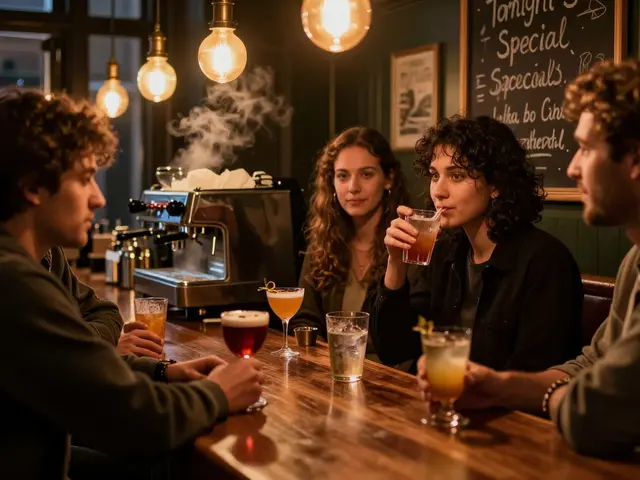
Drinking in London isn’t just about the drink. It’s about the ritual. The Connaught Bar a world-renowned cocktail bar in Mayfair, known for its seasonal menus inspired by art movements-like a gin cocktail shaped like a Dali clock, served with a poem on a card doesn’t just serve drinks. It serves stories. Each cocktail comes with a note: "This one was inspired by the loneliness of a Monet water lily painting."
For something rawer, head to Barbary a North African-inspired bar in Shoreditch, where mezze plates are served on handmade pottery and the bartender might play you a vinyl record of 1970s Moroccan gnawa music. The walls are covered in vintage Moroccan tiles. The music is low. The air smells of cumin and smoke. You don’t come here to get drunk. You come to feel something.
How to plan your cultural night out
Don’t just show up. Plan. Culture doesn’t wait. Here’s how to make the most of it:
- Check Time Out London a trusted source for curated cultural events, including late-night openings, pop-ups, and underground performances every Tuesday for their "Late Night Culture" roundup.
- Sign up for newsletters from venues like Southbank Centre a major arts complex on the Thames, offering late-night events across music, dance, and literature and Young Vic a leading theatre company known for experimental and socially charged productions.
- Bring cash. Many small venues don’t take cards after 10 PM.
- Wear comfortable shoes. You’ll walk more than you sit.
- Arrive 15 minutes early. The best seats aren’t the front row-they’re the ones no one else noticed.
What to avoid
Not every "cultural" night out is worth it. Skip the tourist traps:
- Don’t go to the London Eye at night just because it’s lit up. The view is nice, but the experience is generic.
- Avoid "themed" bars that charge £20 for a cocktail and play Bollywood remixes. They’re not culture-they’re marketing.
- Don’t assume all jazz clubs are the same. Ronnie Scott’s is legendary, but a tiny pub in Hackney might have a better saxophonist and no cover charge.
Final thought: London’s night belongs to those who listen
The city doesn’t shout after dark. It whispers. A cello note in a church. A line of poetry in a basement. A pause between two strangers sharing a bottle of wine in a quiet courtyard. You don’t find culture in London by chasing the loudest party. You find it by slowing down. By choosing the quiet room. By showing up not to be seen-but to see.
What time do cultural venues in London typically close?
Most galleries and museums close by 5 PM, but many host late-night events on Fridays or weekends that run until 10 PM or later. Jazz clubs, poetry slams, and experimental theatre often stay open until midnight or 1 AM. Always check the venue’s website for exact closing times.
Are there free cultural events in London at night?
Yes. St. John’s Smith Square offers free Wednesday night recitals. The Southbank Centre hosts free late-night performances during festivals. Many independent bookshops and bars host free poetry readings or live music with no cover charge. Look for "free entry" tags on Time Out London or Eventbrite.
Is London’s nightlife safe for solo culture seekers?
Generally yes. Areas like Soho, Covent Garden, and South Bank are well-lit and busy late into the night. Stick to established venues, avoid isolated streets after 2 AM, and trust your gut. Many cultural spaces have staff on-site until closing, and staff are often happy to help you get a safe ride home.
What’s the best way to find hidden cultural spots?
Talk to locals. Ask baristas, booksellers, or gallery staff where they go after work. Follow small venues on Instagram-they post last-minute events. Join Facebook groups like "London Late Night Arts" or "Underground London Events." Word-of-mouth still beats algorithms.
Can I visit these places without spending much money?
Absolutely. Many poetry readings, open mic nights, and student performances are free. Some jazz clubs offer "pay what you can" nights. Bookshops sell cheap wine and snacks. You don’t need to spend £50 to have a meaningful night. Sometimes, the best moments cost nothing but your attention.