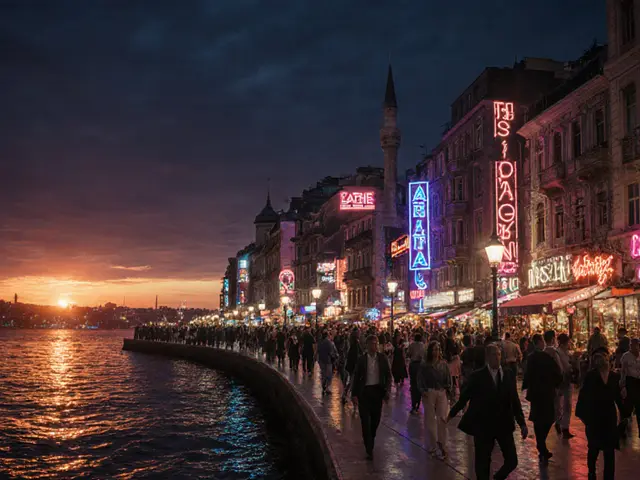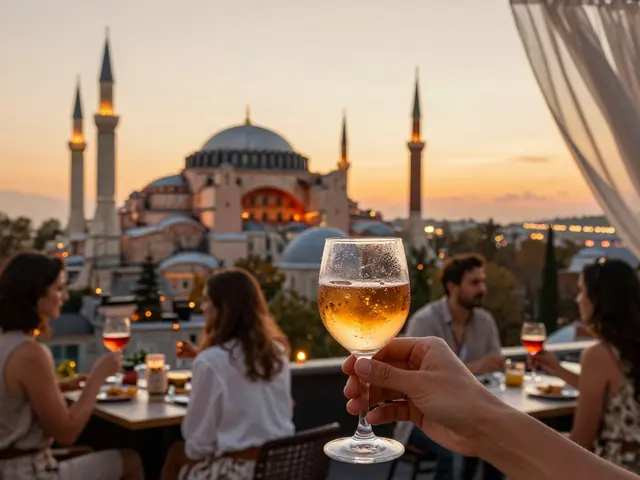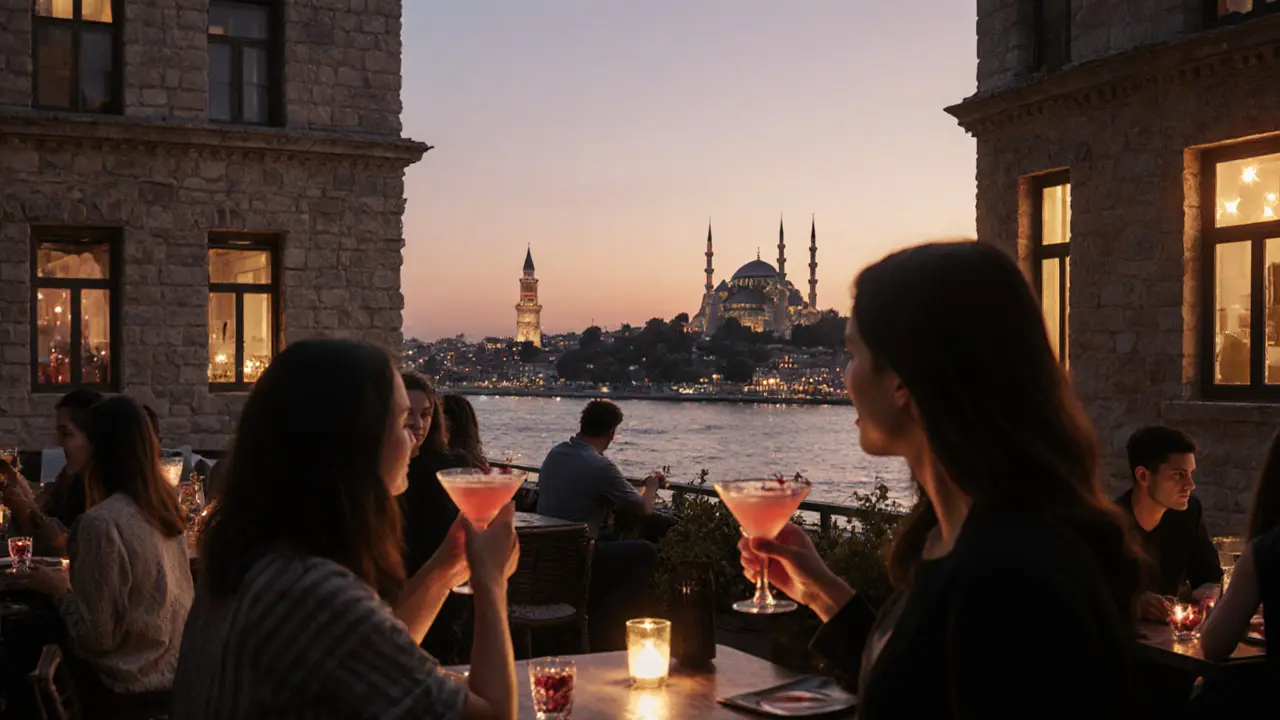
When the sun sets over the Bosphorus, Istanbul doesn’t sleep-it transforms. The city’s nightlife isn’t just about drinking or dancing. It’s a living archive of centuries, where Ottoman-era courtyards hide underground jazz dens, and rooftop bars glow above mosques that have stood for 500 years. You can sip raki beside a 16th-century fountain one hour, then dance to techno in a converted synagogue the next. This isn’t partying. It’s time travel.
The Heartbeat of Beyoğlu: From Ottoman Taverns to Rooftop Lounges
Beyoğlu is where Istanbul’s nightlife began-and where it still pulses strongest. Walk down İstiklal Avenue at 10 p.m., and you’ll hear French jazz spilling from a 1920s bookstore-turned-café, then a Kurdish folk band playing in a basement, then the thump of a DJ spinning house music three floors up. The street hasn’t changed much since the 1800s-still lined with neoclassical buildings, still packed with locals and travelers-but what happens inside them has evolved.
Take Leb-i Derya, a rooftop bar on the edge of Taksim. Opened in 2018, it sits where a French consulate once stood. The view? The Golden Horn, the Galata Tower, and the minarets of Fatih Mosque. The drinks? Locally distilled gin with rose and sumac, served in hand-blown glasses. The crowd? Artists from Kadıköy, expats from Berlin, and Turkish university students who’ve never left the city. It’s not a tourist trap. It’s a meeting point.
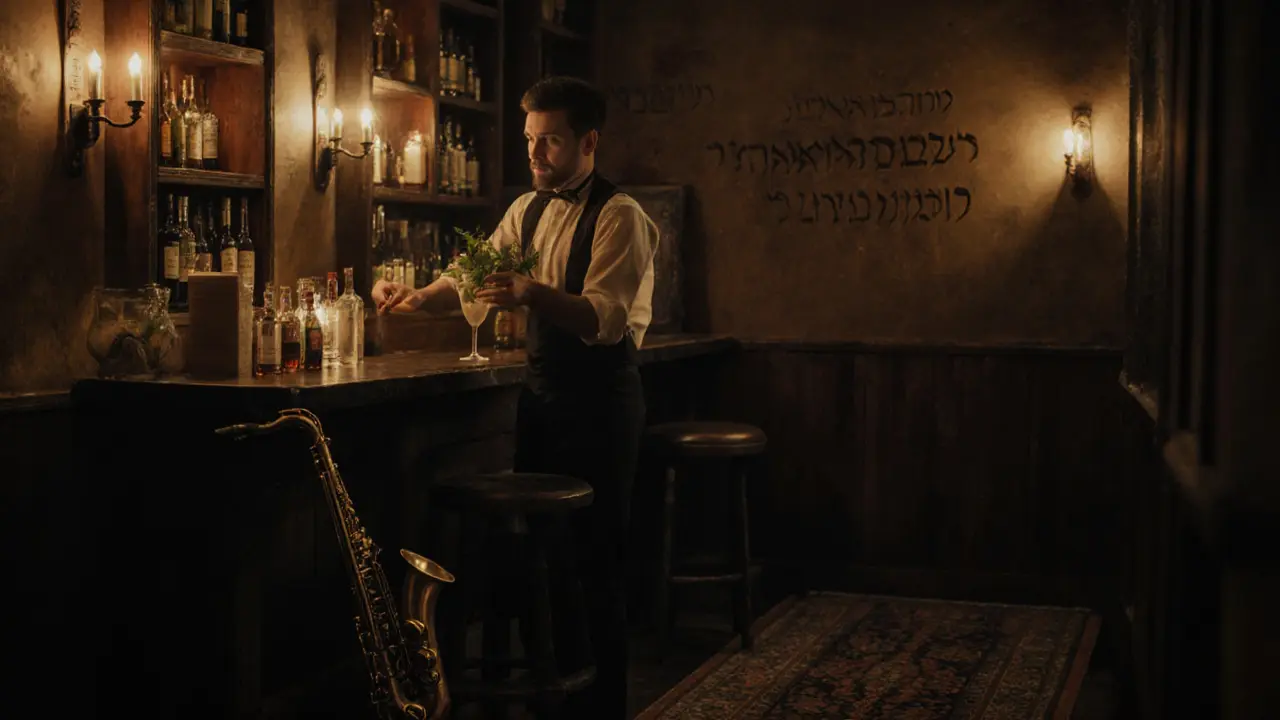
Down the street, in a narrow alley behind the Pera Museum, you’ll find Bar 1919. No sign. Just a wooden door. Inside, it’s dim, warm, and smells like old books and cedar. The bartender, a former jazz drummer, serves only cocktails made with Turkish herbs-thyme, oregano, even wild mint from the Black Sea coast. No menus. He asks what mood you’re in. Then he makes you something you didn’t know you needed.
Underground Beats: From Synagogues to Basements
Istanbul’s club scene thrives in places no guidebook lists. In 2023, a former Sephardic synagogue in Karaköy reopened as Sound of Galata. The original prayer walls still hold the faint Hebrew inscriptions. The ceiling, once painted with stars and angels, now pulses with LED lights. The DJs? Mostly Turkish women who studied in London or Berlin but came home because, as one told me, "The energy here is different. You feel the city breathing."
At Reina, on the European shore of the Bosphorus, the party starts after midnight. It’s not just a club-it’s a floating stage. The dance floor sits on a converted 1950s yacht. The music? A mix of Turkish arabesque, deep house, and Balkan brass. You’ll see grandmothers in fur coats sipping champagne beside twenty-year-olds in neon jackets. No one cares. The music is the only rule.
For something rawer, head to Bar 7 in the old Armenian quarter of Kumkapı. It’s a tiny space, barely big enough for ten people. No name on the door. Just a red light. Inside, the owner, a 68-year-old former opera singer, plays vinyl records from the 1970s-Turkish rock, French chanson, Greek rembetiko. He doesn’t take cards. Cash only. And if you ask him why he still does this, he’ll say, "Because the music remembers what the city forgets."
Where the Locals Go: Beyond the Tourist Zones
Most visitors stick to Beyoğlu. But if you want to see how Istanbul really lives at night, you need to cross the water. Kadıköy, on the Asian side, is where the real locals unwind. It’s quieter, slower, more personal.
At Barman in Moda, you’ll find students from Marmara University sipping craft beer brewed with figs and black pepper. The bar has no TV, no Wi-Fi. Just a chalkboard with the day’s specials and a dog named Kedi who sleeps under the counter. The owner, a former engineer, quit his job in 2020 to open this place. "I didn’t want to spend my life staring at screens," he told me. "I wanted to talk to people."
On weekends, the streets of Kadıköy fill with people carrying plates of grilled sardines from the fish market, laughing as they walk past street musicians playing bağlama. You’ll see couples holding hands under streetlights, old men playing backgammon in cafés that stay open until 4 a.m., and teenagers dancing to Turkish trap music in front of a mural of a 19th-century poet.
Don’t miss Çiya Sofrası at midnight. It’s a restaurant, but at night, it turns into a late-night kitchen where chefs serve mezes no one else makes-wild asparagus with pomegranate molasses, lamb tongue in walnut sauce, grilled quail with thyme honey. The chef, a woman in her 50s, learned these recipes from her grandmother in Diyarbakır. "Food here isn’t about taste," she says. "It’s about memory."
The Rules of the Night: What No One Tells You
Istanbul’s nightlife is free-spirited, but it has unspoken rules. You won’t find 24-hour liquor stores. Alcohol sales stop at 10 p.m. in most neighborhoods, so buy your drinks before then. Bars and clubs can serve until 5 a.m., but they won’t sell you a bottle to take out.
Public drunkenness? Not tolerated. Locals drink slowly, savoring each sip. Loud, rowdy behavior gets you kicked out-fast. Don’t expect to find American-style nightclubs with bottle service. The vibe is intimate, not flashy.
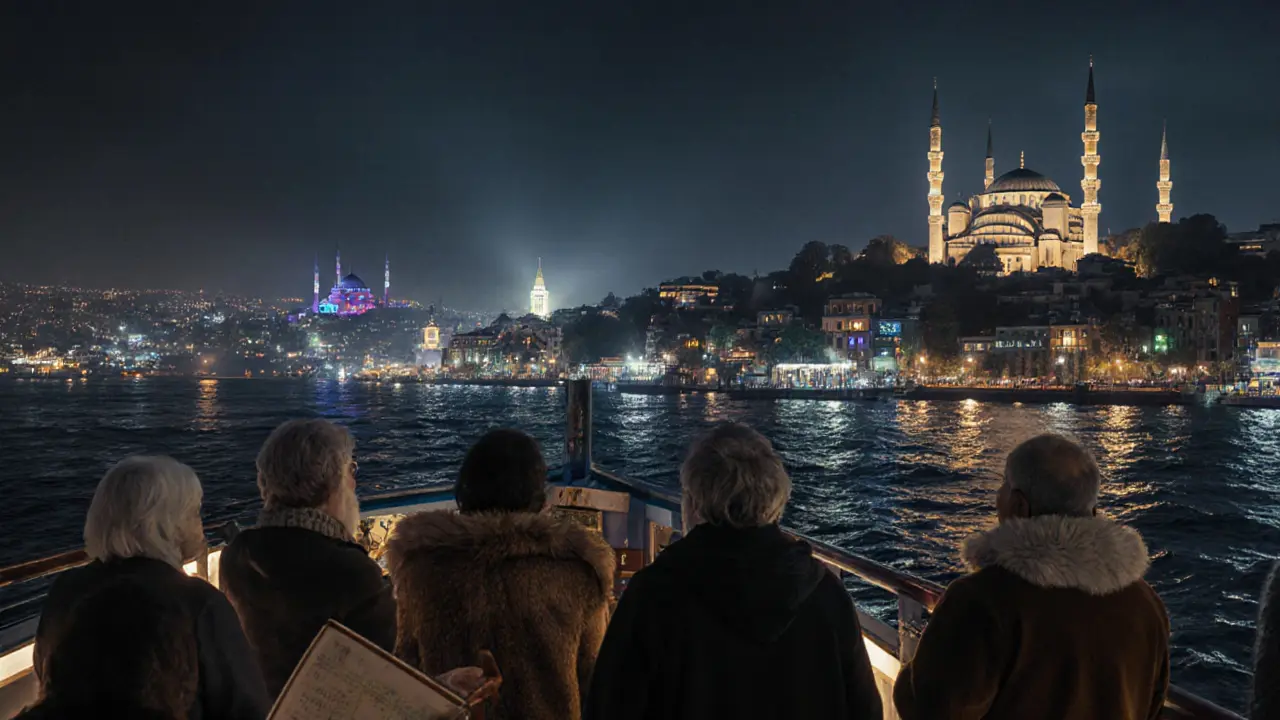
Transportation is easy after midnight. Metro runs until 1 a.m., but the best option is the ferry. Night ferries across the Bosphorus cost under 10 Turkish lira. The ride is silent, calm, and lit by the city’s glow. You’ll see the lights of the Princes’ Islands in the distance, the silhouette of the Maiden’s Tower, and the glow of rooftop bars like Asmalı Mescit on the European side.
And don’t be fooled by the music. Turkish pop might be playing on the radio, but the real soul of the night is in the bağlama, the ney flute, the daf drum. If you hear it, follow it. That’s where the real Istanbul lives.
Seasons of the Night: When to Go and What Changes
Winter nights in Istanbul are colder, but they’re also more magical. The crowds thin, the music gets deeper, and the bars turn up the heat. In December, Bar 1919 hosts acoustic nights with poets reading in Ottoman Turkish. In January, Sound of Galata plays only records from the 1960s-Turkish psychedelic rock, rare jazz from Ankara.
Summer is loud. The beaches along the Bosphorus turn into open-air clubs. Zuma on the Asian side has live oud players at sunset, followed by DJs at midnight. The air smells of salt, grilled octopus, and cigarette smoke. People stay out until dawn, swimming in the sea before heading to breakfast at a seaside café.
Spring and fall? Best times to explore. The weather is mild, the streets are alive, and the city feels like it’s holding its breath before the next wave of noise. That’s when you’ll find the hidden gems-the secret rooftop in Cihangir, the basement jazz club in Nişantaşı that only opens on Thursdays, the old man who plays tar on the corner of Taksim Square and asks for nothing but a cigarette.
What Makes Istanbul’s Nightlife Different
It’s not the number of clubs. It’s not the music. It’s the layers.
Every bar, every alley, every streetlight in Istanbul carries history. The building you’re in might have been a Greek bathhouse. The bartender might be the grandson of a Jewish merchant from Smyrna. The song playing might be a 1920s love ballad rewritten in 2024 with a bassline.
This isn’t a city that just has nightlife. It lives it. And if you listen closely, you’ll hear it whispering-through the clink of glasses, the strum of a string, the silence between beats.
Is Istanbul nightlife safe for tourists?
Yes, Istanbul’s nightlife is generally safe for tourists, especially in popular areas like Beyoğlu, Kadıköy, and along the Bosphorus. Police presence is visible near major clubs and transport hubs. Avoid poorly lit alleys after 2 a.m., and don’t carry large amounts of cash. Locals are helpful-if you look lost, someone will likely guide you to a taxi or ferry. As long as you respect local norms-no public drunkenness, no loud behavior-you’ll be fine.
What’s the best night to go out in Istanbul?
Friday and Saturday nights are the busiest, especially in Beyoğlu and Reina. But if you want something more authentic, go on a Wednesday or Thursday. That’s when locals head to hidden spots-like basement jazz bars in Cihangir or poetry nights in Kadıköy. Clubs are less crowded, prices are lower, and the music is often better because the DJs are experimenting. Weekdays feel more like living in the city, not just visiting it.
Do I need to dress up for Istanbul clubs?
It depends. Rooftop bars like Leb-i Derya or Zuma expect smart casual-no flip-flops or shorts. Underground clubs like Bar 7 or Sound of Galata are more relaxed. You’ll see jeans, t-shirts, and even hoodies. But avoid wearing sportswear or beachwear. Istanbul has a strong sense of style, even at night. A good pair of shoes and a jacket go a long way. It’s not about being fancy-it’s about showing respect for the space.
Can I find English-speaking bartenders in Istanbul?
In tourist-heavy areas like Taksim or Karaköy, yes. Many bartenders speak English, especially in newer bars and international venues. But in places like Bar 1919, Çiya Sofrası at night, or local spots in Kadıköy, English is rare. That’s part of the charm. Learn a few Turkish phrases-"Teşekkür ederim" (thank you), "Bir şey değil" (it’s nothing), "Lütfen" (please)-and you’ll get better service, better drinks, and better stories.
Are there any all-night spots in Istanbul?
True all-night spots are rare. Most clubs close by 5 a.m. But some places stay open longer. Çiya Sofrası serves food until 6 a.m. on weekends. Asmalı Mescit in Beyoğlu has a late-night tea house that opens at 3 a.m. and serves simit and tea to night owls. And if you’re still awake by dawn, head to the fish market in Kadıköy. The street vendors start grilling sardines at 5 a.m. It’s the best breakfast in the city-and the last stop of the night.
If you leave Istanbul without hearing a bağlama played in a dimly lit room, without tasting raki with someone who tells you a story you’ll never forget, without watching the sunrise over the Bosphorus from a rooftop you didn’t know existed-you haven’t really been here. The city doesn’t just have a nightlife. It has a heartbeat. And it’s still beating.