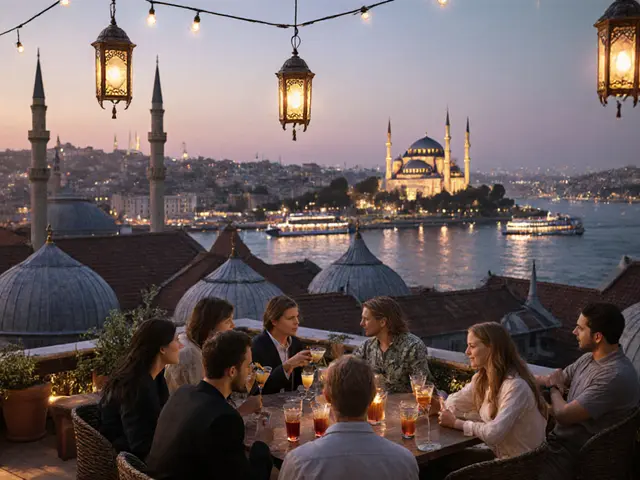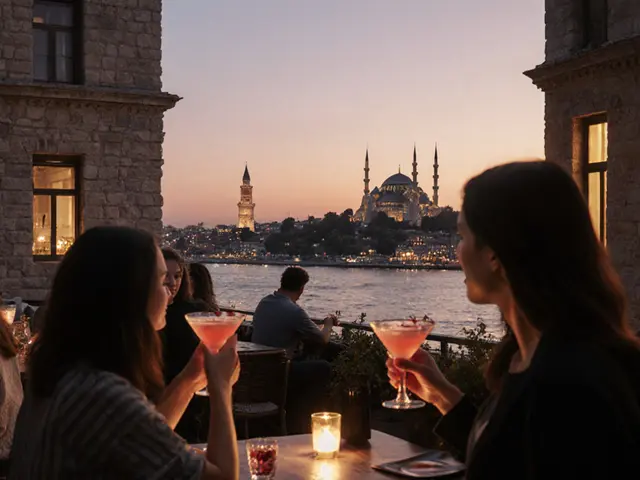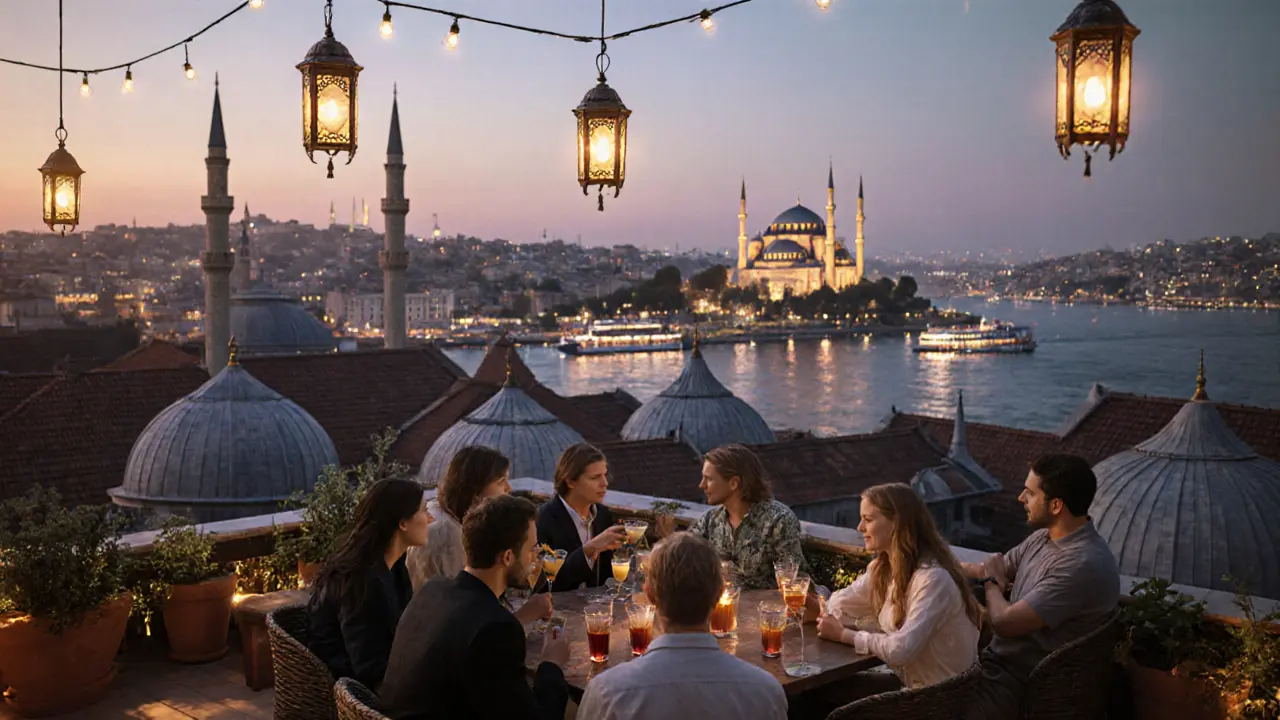
When the sun sets over the Bosphorus, Istanbul doesn’t sleep-it wakes up. The city’s nightlife isn’t just about drinking or dancing. It’s about sipping raki on a rooftop with the call to prayer echoing in the distance, dancing to Turkish pop in a basement club where the bass shakes the walls, or stumbling upon a live jazz band in a 200-year-old Ottoman cellar. This isn’t a party scene copied from London or Berlin. Istanbul’s after-dark culture is layered, wild, and deeply personal.
Where the Locals Go After Midnight
Most tourists head straight to Istiklal Avenue or Karakoy, but the real magic happens off the beaten path. In Nişantaşı, locals gather at Bar 1908, a dimly lit lounge with vintage furniture and a whiskey collection that rivals New York’s best. No neon signs. No bouncers. Just a quiet hum of conversation and the clink of glasses. The bartender knows your name by the second visit.
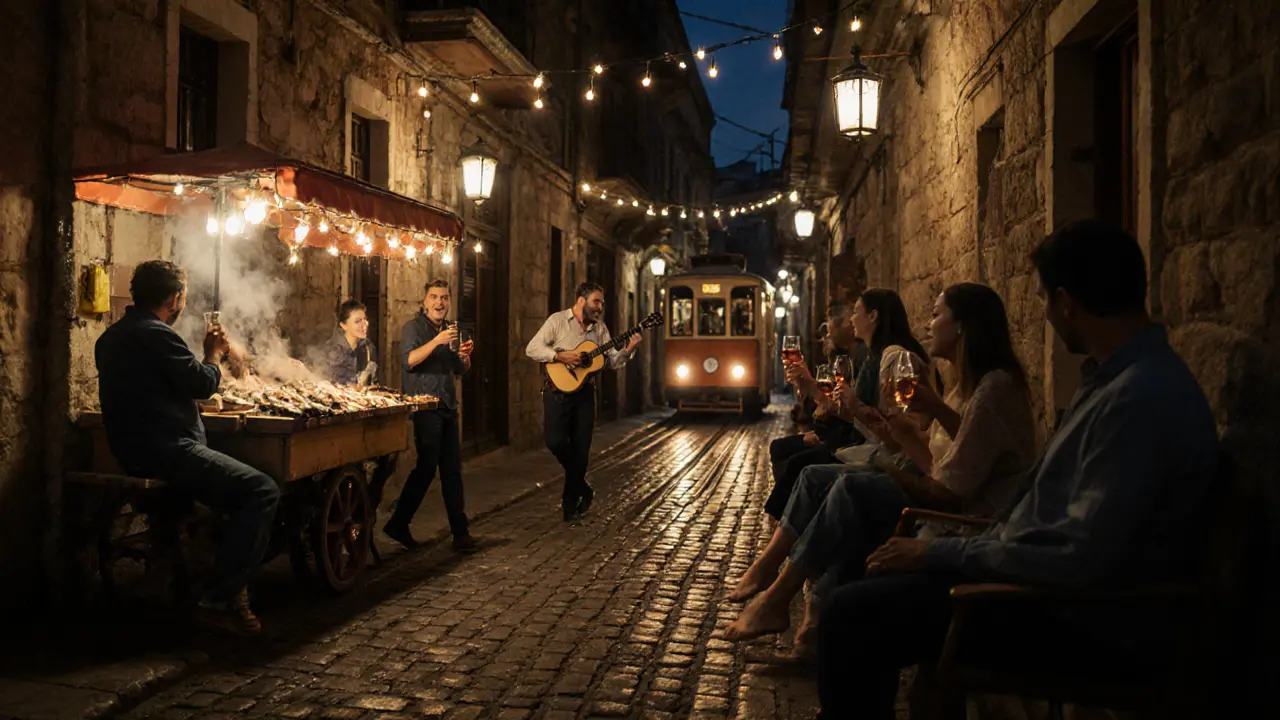
Head to Kadıköy on the Asian side, and you’ll find Çiçek Pasajı-a narrow alley turned into a street food and bar paradise. Grab a grilled sardine from a cart, wash it down with a glass of local wine, and watch street musicians play bağlama while people dance barefoot on the cobblestones. This isn’t a tourist trap. It’s where families, artists, and students unwind after work.
The Club Scene: From Underground to Glamour
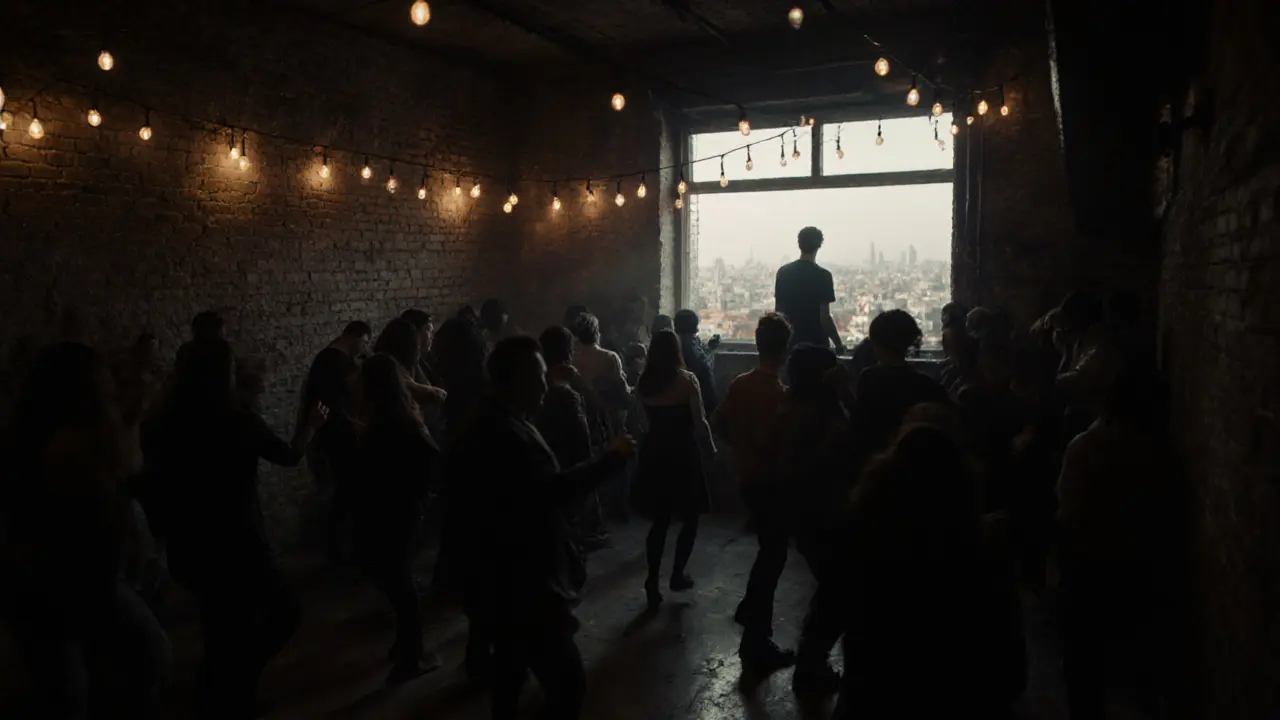
Istanbul’s club scene splits into two worlds: the underground and the upscale. If you want raw energy, go to Karga in Beyoğlu. It’s tucked inside a converted warehouse, no logo, no sign. You find it by the line of people in black, the thump of bass vibrating through the pavement. The DJs play everything from techno to Turkish folk remixes. No VIP tables. No dress code. Just pure, unfiltered rhythm.
For something glitzy, try Reina on the Bosphorus. It’s the place where Turkish celebrities, foreign influencers, and wealthy locals come to be seen. The boat-shaped stage floats on the water, and the view of the illuminated mosques across the strait is unforgettable. Drinks are expensive, but the atmosphere? Priceless.
Rooftops with a View
Nothing beats a rooftop bar in Istanbul. At 360 Istanbul in Taksim, you can sip a cocktail while watching the sun dip behind the Blue Mosque. The music is smooth, the cocktails are crafted with local herbs like mint and sumac, and the crowd is a mix of expats, diplomats, and young professionals. It’s not loud. It’s not crowded. It’s the perfect way to end a long day.
On the Asian side, Leb-i Derya offers the same view but with a more relaxed vibe. Order the çay (Turkish tea) with a slice of baklava, and just sit. Watch the ferries glide across the water. Listen to the wind. Feel the city breathe.
Live Music and Hidden Gems
Istanbul has more live music venues than most capitals. In the Sultanahmet district, Levent 7 hosts traditional Sufi music every Friday night. The drumming, the chanting, the spinning dervishes-it’s spiritual, not theatrical. Tickets cost under 100 Turkish lira. No one bothers you. You just sit, and let it wash over you.
For jazz lovers, Blue Note Istanbul brings international artists to a cozy, candlelit room. The acoustics are perfect. The crowd is respectful. You’ll hear Ella Fitzgerald one night, a Turkish jazz fusion band the next. It’s not advertised online. You find out through word of mouth.
What to Know Before You Go
Here’s the truth: Istanbul’s nightlife is legal, safe, and welcoming-but it’s not always obvious. Most clubs don’t open until 1 a.m. and don’t fill up until 3 a.m. If you show up at 10 p.m., you’ll be the only one there. Don’t leave early. The real party starts when the city gets quiet.
Alcohol is widely available, but public drinking is frowned upon in conservative neighborhoods. Stick to licensed venues. And while you can walk alone at night in most tourist areas, avoid isolated streets near the old city walls after midnight.
Payment? Cash still rules in smaller bars. Credit cards work in Reina or 360 Istanbul, but many local spots only take Turkish lira. ATMs are everywhere, but avoid the ones near tourist hotspots-they charge high fees.
Seasonal Shifts: When to Visit
Summer (June-August) is peak season. The weather is warm, the terraces are packed, and the clubs stay open until dawn. But it’s also crowded and expensive.
Spring (April-May) and fall (September-October) are the sweet spots. The air is crisp, the crowds are thinner, and the prices drop by 30%. You’ll get better service, better tables, and more authentic experiences.
Winter (November-February) is quiet, but not dead. Some of the best jazz and live music happens in winter. The city feels more intimate. The locals appreciate visitors who come when others don’t.
What to Avoid
Don’t fall for the fake "Turkish night" shows in Sultanahmet. They’re overpriced, scripted, and designed to hustle tourists. Skip the "harem" themed bars. They’re tacky and disrespectful.
Don’t assume everyone speaks English. Learn a few Turkish phrases: "Teşekkür ederim" (thank you), "Lütfen" (please), "Ne kadar?" (how much?). Locals notice. They’ll smile, offer you a free dessert, or invite you to join their table.
And never, ever try to haggle over drinks. It’s not a market. It’s a place of culture and connection. Respect the space, and it’ll respect you back.
Final Tip: Let the City Lead You
The best nights in Istanbul aren’t planned. They’re stumbled upon. Follow the music. Follow the laughter. Follow the smell of grilled meat and coffee drifting through alleyways. Say yes to the stranger who invites you to try their homemade rakı. Let the rhythm of the city guide you.
Istanbul’s nightlife doesn’t ask you to fit in. It invites you to feel alive. And that’s the real magic.
Is Istanbul nightlife safe for solo travelers?
Yes, Istanbul’s nightlife is generally safe for solo travelers, especially in popular areas like Beyoğlu, Karaköy, and Kadıköy. Stick to well-lit streets, avoid isolated alleys after midnight, and use registered taxis or ride-sharing apps. Most locals are friendly and will help if you look lost. Avoid flashing expensive items, and keep your drinks in sight-this is common sense anywhere in the world.
What’s the best time to visit Istanbul for nightlife?
The best times are spring (April-May) and fall (September-October). The weather is mild, the crowds are smaller, and prices for drinks and entry are lower. Summer is lively but packed and expensive. Winter is quiet but offers the most authentic experiences-jazz clubs, intimate bars, and locals who actually want to chat.
Do I need to dress up to go out in Istanbul?
It depends on where you’re going. For rooftop bars like 360 Istanbul or Reina, smart casual works-no shorts or flip-flops. For underground clubs like Karga, jeans and a clean shirt are fine. In Kadıköy, you’ll see people in everything from hoodies to dresses. The rule? Be respectful. Avoid overly revealing clothing in conservative neighborhoods, even at night.
Are there any all-night clubs in Istanbul?
Yes, but they’re rare. Reina often stays open until 6 a.m. on weekends. Karga and some other underground spots run until sunrise, especially in summer. Most clubs close by 3 a.m. or 4 a.m. because of local noise laws. If you want to dance until dawn, head to Reina or ask locals for hidden spots-they’ll point you to secret venues with no official hours.
Can I find vegan or vegetarian options in Istanbul nightlife spots?
Absolutely. Many bars in Kadıköy and Beyoğlu now offer vegan meze platters, stuffed grape leaves, grilled eggplant, and lentil balls. Places like Yeniköy and Vege specialize in plant-based Turkish food. Even traditional taverns can adapt-just ask for "vejeteryen" (vegetarian). The city’s food culture has always included plant-based dishes; it’s just been rediscovered in recent years.
Is there a difference between nightlife on the European and Asian sides?
Yes. The European side (Beyoğlu, Karaköy, Taksim) is louder, more touristy, and packed with clubs and rooftop bars. The Asian side (Kadıköy, Moda, Üsküdar) is calmer, more local, and full of hidden jazz cafes, indie music venues, and cozy wine bars. If you want energy, go west. If you want soul, go east. Both are worth exploring.